
Python Training & Certification
- Fundamentals of IT & AI
- Basic Python
- Advanced Python
- Django Python framework
- Python for Data Science
- Cloud & DevOps For Python
- Gen AI & AI Agents
✅ Realtime Classroom Training
✅ Project and Task-Based
✅ 6 to 8 hours every Day
✅ Interviews, Jobs, and Placement Support
✅ Communication Skills & Personality Development
✅ Interview Preparations
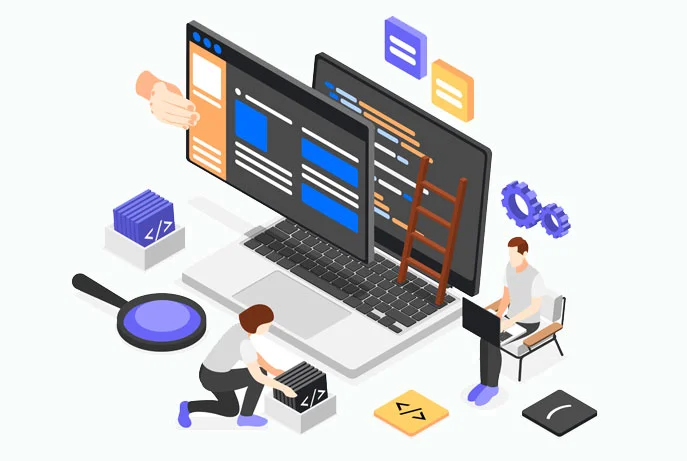
YOUR PATH TO SUCCESSFUL IT CAREER
Our Alumni Work At Top Companies


Python Course Curriculum
Fundamentals of IT & AI
Module 1 - The Software Application Life Cycle
1. What is an Application?
2. Types of Applications
3. Web Application Fundamentals
4. Web Technologies: (List key technologies and their roles)
- Frontend: HTML, CSS, JavaScript, React
- Backend: Python, Java, Node.js
- Databases: SQL (MySQL, PostgreSQL), NoSQL (MongoDB).
5. Software Development Life Cycle (SDLC)
- Phases: Planning, Analysis, Design, Implementation (Coding), Testing, Deployment, Maintenance.
6. Application Development Methodologies
- Agile: Core principles, Scrum, Kanban
- Waterfall
Module 2 - Data Fundamentals
1. What is Data
2. Types of Data
3. Data Storage
4. Data Analysis
5. Data Engineering
6. Data Science
Module 3 - Computing and the Cloud
1. The Importance of Computing Power
2. Key Computing Technologies:
- CPU (Central Processing Unit)
- GPU (Graphics Processing Unit)
3. Cloud Computing:
- What is the Cloud?
- Cloud Service Models:
- IaaS (Infrastructure as a Service)
- PaaS (Platform as a Service)
- SaaS (Software as a Service)
Module 4 - Introduction to AI and Generative AI
1. What is Artificial Intelligence (AI)?
2. How AI Works?
3. Key Concepts:
- Machine Learning (ML)
- Deep Learning (DL)
4. Generative AI:
- What is Generative AI?
- Examples: Large Language Models (LLMs), image generation models.
5. AI in Everyday Learning
Module 5 - Real World Applications of Technology
1. Customer Relationship Management (CRM)
2. Human Resource Management Systems (HRMS)
3. Retail & E-Commerce
4. Healthcare
Basic Python
Module 1 - Python Introduction and Setup
1. Python’s applicability across various domains
2. Installation, environment setup, and path configuration
3. Writing and executing the first Python script
Module 2 - Python Fundamentals
1. Keywords, Identifiers, and basic syntax
2. Variables, Data Types, and Operators
3. Introduction to Input/Output operations
Module 3 - Control Structures and Functions
1. Conditional Statements: If, Elif, Else
2. Loops: For, While, and control flow mechanisms
3. Understanding and defining Functions in Python
Module 4 - Strings and Collections
1. String operations and manipulations
2. Lists and their operations
3. Introduction to Tuples and Sets
Module 5 - Diving Deeper into Collections
1. Detailed exploration of Dictionaries
2. Frozen Sets and their use-cases
3. Advanced list comprehensions
Advanced Python
Module 1 - Advanced Collections and Sequences
1. Advanced methods in Lists, Tuples, and Dictionaries
2. Sets, Frozen Sets, and operations
3. Comprehensive look into Python Collections
Module 2 - Functional Programming in Python
1. Exploring types of Functions and Arguments
2. Lambda functions and their applications
3. Map, Reduce, and Filter functions
Module 3 - File Handling and Modules
1. File operations and handling different file formats
2. Working with Excel and CSV files in Python
3. Understanding and using Python Modules and Packages
Module 4 - Object-Oriented Programming
1. Deep dive into Classes, Objects, and Methods
2. Constructors, Destructors, and Types of Methods
3. Inheritance, Polymorphism, and Encapsulation
Module 5 - Exception Handling and Regular Expression
1. Exception Handling: Try, Except, Finally
2. Creating and using Custom Exceptions
3. Utilizing Regular Expressions for pattern matching
Django Python Framework
Module 1 - Getting Started with Django
1. Introduction to Django and its features
2. Setting up a Django project and understanding its structure
3. MVC Model, creating views, and URL mapping
Module 2 - Django Core Concepts
1. Database models and migrations
2. Admin interface and deploying Django applications
3. Forms and handling user inputs
Module 3 - Advanced Django Features
1. Advanced URL routing and views
2. Class-based views and middleware
3. Working with static and media files
Module 4 - Django REST Features
1. Building RESTful APIs with Django REST Framework
2. Serializers and request handling
3. Authentication and permissions in APIs
Module 5 - Testing and Deployment
1. Writing tests for Django applications
2. Deployment strategies and best practices
3. Configuring Django applications for production
Python for Data Science
Module 1 - Data Science Foundations
1. Introduction to Data Science with Python
2. Data manipulation with Pandas
3. Data visualization with Matplotlib and Seaborn
- Basic concepts of application deployment on the cloud, including containerization basics with Docker and initial orchestration concepts.
Module 2 - Advanced Data Manipulation
1. Advanced Pandas techniques and operations
2. Time Series data analysis with Pandas
3. Combining, merging, and reshaping data frames
Module 3 - Data Visualization Deep Dive
1. Advanced visualization with Matplotlib
2. Interactive visualizations with Plotly
3. Geospatial data visualization
Module 4 - Introduction to Machine Learning
1. Basics of machine learning with Python
2. Using Scikit-learn for machine learning models
3. Model evaluation and validation techniques
Module 5 - Advanced Topics in Data Science
1. Introduction to Neural Networks and Deep Learning
2. Working with text data and Natural Language Processing (NLP)
3. Introduction to Big Data technologies with Python
Cloud & DevOps For Python
Module 1 - Introduction to Cloud Computing for Developers
Topics:
1. Cloud Computing Basics
- Understanding cloud computing: Definitions, service models (IaaS, PaaS, SaaS), and deployment models (public, private, hybrid, multicloud).
2. Cloud Service Providers Overview
- Introduction to major cloud platforms (e.g., AWS, Azure, Google Cloud), focusing on their core services relevant to developers.
3. Cloud-based Development Environments
- Setting up and utilizing cloud-based IDEs and development tools to streamline development workflows.
4. Deploying Applications on the Cloud
- Basic concepts of application deployment on the cloud, including containerization basics with Docker and initial orchestration concepts.
Module 2 - DevOps for Full Stack Developers
Topics:
1. Understanding DevOps
- The philosophy, practices, and benefits of DevOps in modern software development, emphasizing collaboration, automation, and integration.
2. Version Control with Git
- Deep dive into using Git for source code management, including best practices for branches, commits, merges, and pull requests.
3. Continuous Integration/Continuous Deployment (CI/CD)
- Introduction to CI/CD pipelines, overview of tools ( GitHub Actions), and setting up basic pipelines for automated testing and deployment.
4. Monitoring and Feedback
- Basics of application monitoring, log management, and utilizing feedback for continuous improvement.
Module 3 - Infrastructure and Configuration Management
Topics:
1. Containers and Docker
- Introduction to containers, Docker fundamentals, creating Docker images, and container management basics.
2. Managing Application Infrastructure
- Basic strategies for managing infrastructure as part of the application lifecycle, including introduction to infrastructure as code (IaC) principles.
Module 4 - Building and Deploying Scalable Web Applications
Topics:
1. Scalable Application Design
- Principles of designing scalable applications that can grow with user demand, focusing on microservices architecture and stateless application design.
2. Cloud-native Services for Developers
- Leveraging cloud-native services (e.g., AWS Lambda, Azure Functions, Google Cloud Run) for building and deploying applications.
3. Databases in the Cloud
- Overview of cloud database services (SQL and NoSQL) and integrating them into web applications.
4. Security Basics in Cloud and DevOps
- Understanding security best practices in cloud environments and throughout the DevOps pipeline.
Module 5 - Project Collaboration and DevOps Practices
Topics:
1. Agile and Scrum Methodologies
- Incorporating Agile and Scrum practices into team collaboration for efficient project management.
2. Code Review and Collaboration Tools
- Utilizing code review processes and collaboration tools GitHub, to enhance code quality and team productivity.
3. Automation in Development
- Exploring automation beyond CI/CD, including automated testing frameworks, database migrations, and environment setup.
4. DevOps Culture and Best Practices
- Cultivating a DevOps culture within teams, embracing continuous learning, and adopting industry best practices for sustainable development.
Gen AI & AI Agents
Module 1 - Fundamentals of Generative AI
Introduction to Generative AI
1. What is Generative AI?
2. Key Applications:
- Text (ChatGPT, Claude, LLaMA)
- Images (DALL·E, MidJourney, Stable Diffusion)
- Audio (Music Generation, Voice Cloning)
- Code (GitHub Copilot, Cursor)
3. Evolution of GenAI:
- Rule-Based → Deep Learning → Transformers
- GANs vs. VAEs vs. LLMs
Module 2 - Prompt Engineering
1. Effective Prompt Design
- Instruction-Based, Few-Shot, Zero-Shot
2. Advanced Techniques:
- Chain-of-Thought (CoT) Prompting
- Self-Consistency & Iterative Refinement
- Hands-on:
- Optimizing prompts for GPT-4, Claude, LLaMA
Module 3 - Transformers and Large Language Models
Transformer Architecture
1. Why Transformers? (Limitations of RNNs/LSTMs)
2. Key Components:
- Self-Attention & Multi-Head Attention
- Encoder-Decoder (BERT vs. GPT)
3. Evolution: BERT → GPT → T5 → Mixture of Experts
4. Large Language Models (LLMs)
5. Pre-training vs. Fine-tuning
6. Popular Architectures:
- GPT-4, Claude, Gemini, LLaMA 3
- BERT (Encoder-based) vs. T5 (Text-to-Text)
Module 4 - AI Agents - Fundamentals & Frameworks
Introduction to AI Agents
1. What are AI Agents?
2. vs. Traditional AI:
3. Applications:
AI Agent Frameworks
1. CrewAI (Multi-Agent Collaboration):
2. n8n (Workflow Automation):
Module 5 - Building & Deploying AI Agents
Designing AI Agents
- CrewAI + n8n: Automating Business Workflows
- Multi-Agent Systems: Collaboration & Specialization
Real-World Applications
- Case Studies:
- AI Customer Support Agents
Our Trending Courses
DevOps Training
DevOps training emphasizes integrating development, operations, automation, and continuous delivery through collaboration.

2 Months

6 Live Projects

4.9/5
Java Training
Java training focuses on programming basics, OOP, data structures, APIs, and app development.
2 Months
6 Live Projects
4.9/5
React Training
React JS training covers UI building, component architecture, state management, hooks, and modern practices.
2 Months
5 Live Projects
4.8/5
Python Training
Python training emphasises on programming concepts and developing applications using Python’s user-friendly syntax.
2 Months
5 Live Projects
4.8/5
USEFUL LINKS
HOME
ABOUT
COURSES
DOWNLOADS
CERTIFICATION
AI UNIVERSITIES
GALLERY
CONTACT US
FAQS
COURSES
Data Science
Cloud computing
AIML
Cybersecurity
Python Full stack Developer
Java Full stack Developer
Embedded Systems
LOCATION
NEXTGEN AI INSTITUTION
OPP QP FUNCTION HALL NEAR ZAFARABAD CROSS
MSK MILL RING ROAD
KALABURAGI 585103
Follow us: